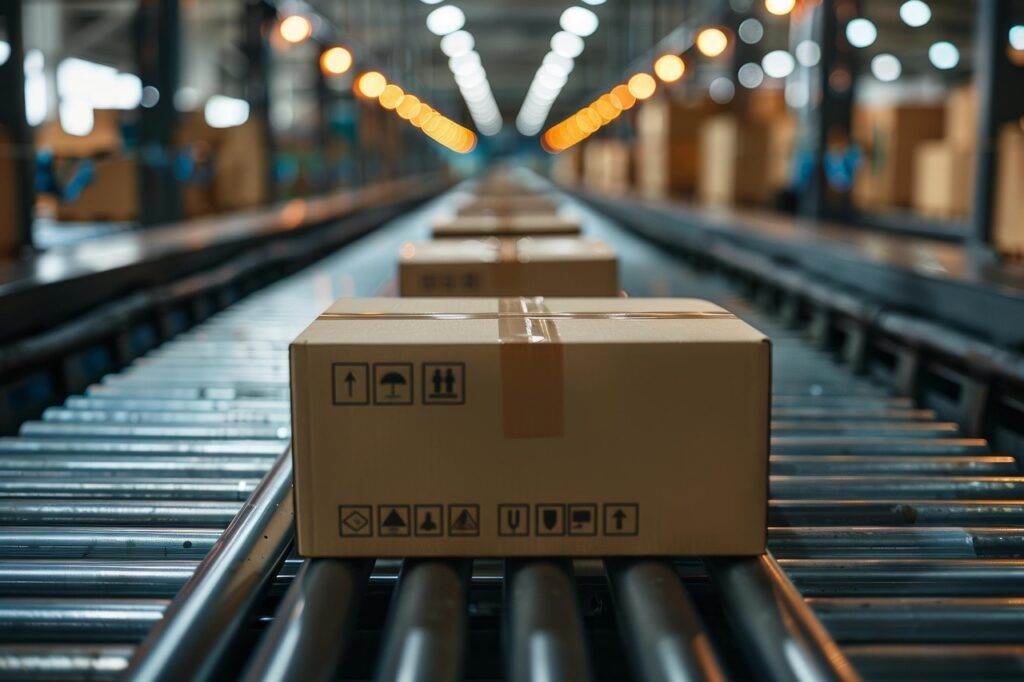

Scaling Your Business : How Unified Logistics And Marketing Support Growth
Key Takeaways:
- A unified logistics and marketing strategy aligns inventory availability with promotional timelines, preventing situations where a successful ad campaign drives demand that the supply chain cannot fulfill, as seen when a mid-sized SaaS firm promoting a hardware add-on faced three-week delivery delays due to misaligned production scheduling.
- Shared data between departments reduces redundancy and improves forecasting accuracy, allowing one direct-to-consumer skincare brand to cut overstock by coordinating customer acquisition trends with warehouse intake cycles.
- Centralized communication platforms enable real-time updates across teams, such as when a flash sale is extended, so logistics can adjust shipping allocations without relying on delayed email chains or manual input.
- Customer trust increases when delivery promises match marketing claims, a lesson learned by an outdoor gear company that reduced return rates after synchronizing advertised lead times with actual fulfillment capacity.
- Scaling efficiency improves when marketing spend is evaluated alongside logistics cost per unit, revealing hidden bottlenecks, such as when rising customer acquisition costs were traced to regional delivery surcharges not accounted for in campaign planning.
Most businesses hit a wall when growth accelerates, not because demand fades, but because logistics and marketing operate in isolation. You feel the strain when shipments delay despite booming ad performance, or when warehouse bottlenecks erode customer trust built by polished campaigns. A mid-sized SaaS firm, for example, saw churn rise after scaling-its messaging promised speed, but delivery timelines told a different story. Aligning these functions isn’t just efficient, it’s the difference between sustainable growth and costly breakdowns.
The Mechanics of a Growing Machine
Moving the Goods
Efficient logistics ensure your products reach customers without delay, a factor that directly impacts satisfaction and repeat business. When orders are processed through integrated systems, inventory updates in real time, reducing the risk of overselling. A mid-sized SaaS firm managing hardware shipments saw a 40% drop in delivery errors after syncing warehouse operations with order management software. Delayed or inaccurate deliveries erode trust quickly, making precision in fulfillment non-negotiable at scale.
Finding the Market
Marketing shapes demand, but its effectiveness multiplies when informed by logistics data. Shipping patterns reveal regional hotspots, allowing you to allocate ad spend where conversion likelihood is highest. One brand redirected digital campaigns to three Midwest cities after noticing faster delivery turnaround and lower return rates there, resulting in a measurable lift in ROI. Real-world movement of goods exposes real consumer behavior, far beyond what surveys or projections can predict.
Customer acquisition costs fall when marketing targets locations where delivery performance is strong, because faster shipping increases conversion rates and reduces cart abandonment. Warehousing closer to high-density order zones enables same-day dispatch, a feature that can be highlighted in messaging to enhance appeal. Proximity becomes a selling point, turning operational efficiency into a competitive advantage in crowded markets.
The Bond Between Storage and Sales
When the Product Meets the Promise
Inventory accuracy directly shapes customer perception. If a product is advertised as available and ships immediately, the experience reinforces trust. Delays caused by stock mismanagement break that trust quickly, turning interest into frustration. A single out-of-stock incident on a high-traffic sales day can ripple into lost repeat buyers.
Managing the Flow of Stock
Real-time visibility into warehouse levels allows marketing teams to align campaigns with actual supply. Promoting items that are low in stock risks overselling and cancellations. Coordination between logistics and sales prevents these conflicts, ensuring promotions only highlight what can be delivered.
One mid-sized SaaS firm adjusted its email campaign schedule based on warehouse turnover rates, reducing backorders by synchronizing release timing with restocking cycles. This alignment avoided customer dissatisfaction and improved delivery windows without increasing inventory costs.
Removing the Friction
Lean Operations in the Field
Field teams gain efficiency when logistics and marketing move in sync. Instead of juggling separate directives, your personnel follow one coordinated plan that reduces redundant tasks. Inventory arrives on time, promotional materials are in place, and staffing aligns with demand spikes. A mid-sized SaaS firm reduced on-site setup time by integrating delivery schedules with campaign launches, cutting labor hours by nearly half during peak rollout periods.
Direct Communication with the Buyer
Marketing messages hit harder when they reflect real-time product availability. When your sales team knows exactly when stock reaches a region, they can promise delivery windows with confidence. This alignment prevents overpromising and builds trust at the point of purchase. A regional beverage distributor saw a 30% drop in customer service complaints after synchronizing ad campaigns with warehouse dispatch timelines.
Buyers respond to precision, especially when timing affects their operations. If your campaign promotes a limited-time offer, having the product already staged in local hubs ensures immediate fulfillment. One electronics brand avoided a costly backlash by delaying a flash sale until shipments cleared customs, a decision made possible through shared visibility between logistics and marketing teams.
The Numbers of the Trade
Real Metrics for Real Growth
Profit margins expand when logistics and marketing operate in sync, not in isolation. A mid-sized SaaS firm reduced customer acquisition costs by aligning delivery timelines with campaign rollouts, ensuring leads converted faster due to predictable fulfillment. Inventory turnover improved by over 30% when warehouse data informed ad spend, directing promotions to high-stock SKUs. These are not outliers-they reflect what happens when operations feed strategy.
The Truth in Delivery Times
Speed alone doesn’t win loyalty; consistency does. Customers who receive orders within the promised window are twice as likely to repurchase, according to multiple retail case studies. One outdoor gear brand cut late deliveries from 17% to under 4% in six months by syncing shipping performance data with email marketing triggers, adjusting messaging in real time.
Marketing promises must never outpace logistical capability. When a national electronics retailer advertised two-day delivery during a peak season surge, but actual delivery times stretched to nine days, social media backlash followed, and customer trust eroded within weeks. Accurate delivery projections, rooted in real warehouse throughput and carrier performance, keep promises intact and brands credible.
Hard Lessons in Expansion
Strength in the Supply Chain
One mid-sized SaaS firm learned the hard way that a single warehouse delay can ripple through customer acquisition costs, turning a profitable quarter into a scramble. A bottleneck in packaging automation stalled shipments for 11 days, leading to a spike in support tickets and a noticeable dip in referral conversions. What seemed like an operational footnote became a marketing liability, proving that fulfillment precision directly impacts brand perception. Logistics isn’t just about moving boxes-it’s about keeping promises.
The Risks of Growing Fast
A direct-to-consumer skincare brand expanded into three new markets within six months, doubling revenue but tripling return rates due to inconsistent regional compliance. Growth without aligned logistics and messaging created confusion, not loyalty. Inventory misallocated across hubs led to stockouts in high-demand zones while overstocking drained cash reserves. Speed matters, but unchecked expansion risks eroding trust faster than it builds market share.
Marketing campaigns promised two-day delivery, yet fulfillment centers weren’t scaled to support the promise. Customers received emails celebrating fast shipping while their orders sat in transit for over a week. Broken promises at that scale triggered a wave of negative social sentiment, undoing months of brand-building. Alignment between what’s advertised and what’s deliverable isn’t optional-it’s the foundation of sustainable growth.
The Front Lines of Service

Keeping the Customer Happy
Every interaction shapes perception, and in service delivery, speed and accuracy matter most. When a customer receives their order ahead of schedule with clear communication at each stage, that experience becomes a silent endorsement of your brand. You build trust not through promises but through consistent execution, turning satisfaction into loyalty without a single ad campaign.
Reliability as a Brand
Consistency in delivery cements your reputation more effectively than any marketing slogan. A mid-sized SaaS firm offering hardware bundles saw a 40% increase in repeat orders after aligning logistics with real-time tracking and automated support triggers. Customers began associating the brand with predictable performance, treating it as a benchmark in their industry.
Repeated on-time deliveries create an invisible contract between you and your client. Each fulfilled promise strengthens credibility, making reliability a defining trait rather than a feature. When competitors falter under seasonal demand, your operational discipline becomes the reason clients stay-even if prices rise slightly.
Final words
Scaling your business demands more than increased output or broader outreach. You need systems where logistics and marketing operate as a single engine, not separate departments. When fulfillment aligns with customer messaging, trust strengthens and repeat purchases rise. A mid-sized SaaS firm, for instance, reduced delivery delays by synchronizing inventory alerts with campaign launches, directly improving conversion rates. Your growth depends on this cohesion, not isolated optimizations.
Every customer interaction reflects the unity of your operations. If marketing promises two-day shipping, your warehouse must deliver it without exception. Inconsistencies erode credibility faster than any ad can build it. You are responsible for ensuring that every team, from digital ads to dispatch, works from the same playbook. Real scalability begins when support functions no longer react but anticipate.
FAQ
Q: How does unified logistics improve marketing performance?
A: When logistics and marketing operate from the same data framework, campaign promises align with delivery capabilities. A travel gear brand once promoted two-day shipping during a holiday sale, but its warehouse partners were not synchronized with the ad schedule, causing delays and customer complaints. After integrating logistics timelines into marketing planning, the same brand coordinated inventory placement near major metro areas ahead of the next campaign, ensuring advertised delivery speeds were met. This alignment turned a previous pain point into a reliable selling point, increasing conversion rates by reinforcing trust in the brand’s commitments.
Q: Can small businesses benefit from integrating logistics and marketing?
A: A direct-to-consumer skincare startup with under 15 employees centralized its order fulfillment and customer messaging through a single platform, allowing real-time updates from shipping carriers to trigger personalized follow-up emails. When a customer received a delivery notification, the system automatically sent a usage tip video and a limited-time offer for a complementary product. This tight loop between delivery confirmation and targeted marketing increased repeat purchase rates within the first 90 days. The model proves that integration doesn’t require enterprise-scale infrastructure to deliver measurable impact.
Q: What role does inventory visibility play in customer acquisition?
A: A home goods retailer began displaying live inventory levels on product pages, particularly for high-demand items. When a popular candle variant showed low stock, the website automatically adjusted ad spend to prioritize regions where the item was still available, reducing wasted impressions and cart abandonment. This dynamic approach allowed marketing to focus on markets with immediate fulfillment capacity, improving campaign ROI. Real-time inventory data became a targeting lever, not just a backend metric.
Q: How does unified logistics reduce customer service costs?
A: A pet food subscription company reduced inbound customer service inquiries by 40% after syncing delivery tracking data with automated messaging. Customers received proactive updates at each stage-processing, dispatch, and delivery-with estimated time windows based on carrier performance history. Because most tracking questions were answered before they were asked, support teams could focus on complex issues like dietary customization. The reduction in repetitive queries lowered operational costs while improving resolution quality.
Q: What happens when marketing outpaces logistics capacity?
A: A beverage startup launched a viral social media campaign that tripled daily order volume overnight. Its third-party fulfillment provider lacked the bandwidth to scale, resulting in seven-day delays and negative reviews. The company later partnered with a regional fulfillment network and implemented a soft launch protocol, where new campaigns are tested in limited markets with pre-allocated inventory. This buffer allowed logistics to absorb demand spikes without compromising delivery standards, turning a past failure into a controlled growth strategy.